
Every jug of amber syrup begins as something surprisingly plain: clear, watery sap that tastes only faintly sweet. Turning that thin liquid into the rich topping you drizzle over pancakes takes time, patience, and a good bit of Wisconsin cold. If you have ever wondered how is maple syrup made, you are asking about a process that stretches back centuries and still relies on the same natural rhythms today.
At Maple Hollow, we have spent generations perfecting the craft of producing maple syrup in Wisconsin, and we love pulling back the curtain on how it all happens. The short version is that it takes roughly forty gallons of sap to make a single gallon of finished syrup. The longer version, which we will walk through below, is a story of trees, weather, and careful attention at every step.
It Starts With the Trees and the Weather
Maple syrup depends entirely on the sugar maple, a tree that stores starch in its roots and trunk through the winter months. As spring approaches, that starch converts to sugar, and the sugar dissolves into the sap that moves through the tree. This is the raw material for everything that follows.
The timing is dictated by temperature, not the calendar. Sap flows best when nights dip below freezing and days climb above it, usually in late winter and early spring. That freeze and thaw cycle builds pressure inside the tree, pushing sap out through any opening, including a tap. When the weather cooperates across Wisconsin and the surrounding areas, the season can stretch for several weeks. When it warms too quickly, the window closes fast. Every year is a little different, which is part of what makes each batch special.
Tapping: Collecting the Sap
Once conditions are right, it is time to tap the trees. This involves drilling a small hole into the trunk and inserting a spout, called a spile, that allows sap to drip out. A healthy, mature maple can support one or more taps without harm, and the tree seals the hole naturally once the season ends. Done responsibly, tapping does not damage the tree, and many maples are tapped year after year for decades.
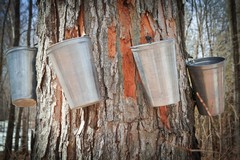
Traditionally, sap was collected in buckets hung from each spile, and plenty of small producers still do it that way. Larger operations often run networks of tubing that carry sap directly from the trees to a central collection point. Either way, the sap must be gathered quickly and kept cool, because it is a fresh, natural liquid that can spoil if it sits too long. The faster it moves from tree to evaporator, the better the finished product tastes. If you have ever taken a walk in the woods during sugaring season, you have seen just how much effort goes into this stage.
How Is Maple Syrup Made From Watery Sap?
This is the heart of the process and the answer most people are curious about. Fresh sap is roughly ninety-eight percent water, so the goal is to boil off nearly all of that water until only concentrated sugar remains. This happens in an evaporator, a long, shallow pan set over a strong heat source. As the sap simmers, steam rises in great billowing clouds, and the liquid slowly darkens and thickens.
Boiling is not a matter of walking away and coming back later. The syrup maker watches the temperature and the density closely, because there is a precise point at which sap becomes syrup. Push it too far and the sugar can scorch or crystallize. Stop too soon and the syrup will be thin and prone to spoiling. Finished maple syrup boils at a specific temperature above the boiling point of water, and experienced producers also test the density to confirm it is exactly right. So when someone asks how is maple syrup made, the honest answer is that it is made through hours of careful boiling and constant attention.
Color and flavor develop during this stage too. Sap gathered early in the season tends to produce lighter, more delicate syrup, while later-season sap yields darker syrup with a stronger, more robust taste. Neither is better than the other. They simply suit different preferences and different recipes.
Filtering, Grading, and Bottling
After the syrup reaches the correct density, it is filtered to remove a natural mineral sediment sometimes called sugar sand. Filtering leaves the syrup clear and smooth without stripping away any of its character. From there, the syrup is graded by color and flavor, then bottled while still hot to seal in freshness.
Understanding how is maple syrup made also means appreciating what is not involved. Pure maple syrup contains no additives, no artificial flavors, and no corn syrup. It is simply concentrated tree sap. That purity is why it matters where your syrup comes from and how it is handled. Ours is even certified kosher, reflecting the care we put into every step from woods to bottle.
From Kitchen Staple to Culinary Star
Most people first meet maple syrup on a breakfast plate, and it certainly earns its place there. But real maple syrup is far more versatile than pancakes and waffles suggest. Its deep sweetness balances salt and acid beautifully, which makes it a natural fit for glazes, marinades, dressings, and baked goods.
Once you know how is maple syrup made and how much work goes into every jar, you may find yourself reaching for it more often. It shines in a warm drink on a cold night, brushed over roasted vegetables, or stirred into a sauce for pork or salmon. If you want to branch out beyond breakfast, our collection of savory maple syrup recipes offers plenty of ideas to get you started. A little pure syrup goes a long way toward turning an ordinary dish into something memorable.
Here is a quick summary of the journey from tree to table:
- Sugar maples convert stored starch to sugar as spring nears, sending sweet sap through the tree.
- Trees are tapped, and sap is collected quickly while temperatures still cycle above and below freezing.
- Sap is boiled down in an evaporator until most of the water is gone and true syrup remains.
- The syrup is filtered, graded, and bottled hot to lock in flavor and freshness.
Tasting the Difference That Care Makes
The magic of maple syrup is that something so simple can be so rich. There are no shortcuts. Nature sets the schedule, and the producer supplies the patience. Every gallon reflects the weather of a single season and the hands that watched over the boiling pan, which is why no two years taste exactly alike.
We take pride in continuing this tradition for families across Wisconsin and neighboring communities, offering syrup made the honest way from trees rooted right here. Now that you know how is maple syrup made, we hope you taste that story in every drop. If you have questions about our products or want to bring some home, we invite you to contact us anytime. Something this sweet is always worth sharing.